![Use these strategies to boost your Home Value by $15K-$40K: Smart Home ROI Guide [2026]](https://moryenetworks.com/wp-content/uploads/2025/12/How-to-increase-home-value-in-2026-1-1024x865.webp)
KEY TAKEAWAYS
- Home automation adds 3-5% to property value on average, translating to $15,000-$25,000 on a typical $500,000 home.
- Smart homes sell 40% faster in competitive markets, with 78% of homebuyers willing to pay premiums for automation features.
- Strategic upgrades outperform random purchases: Focus on security (locks, cameras, doorbells), energy efficiency (smart thermostats), and convenience (lighting, voice control) for maximum ROI.
- Professional installation in homes above $500,000 typically returns 150-200% of investment costs.
- UK buyers pay 7.7% premiums for smart-enabled homes, while tech-forward US markets see 7-10% increases.
Table of Contents
Is there a demand for Smart Homes?
The global smart home market reached over $100 billion in 2025 and is projected to exceed $237 billion by 2032, indicating sustained buyer demand. This growth reflects a fundamental shift in how buyers evaluate properties as smart features have transitioned from nice to have to must have standards.
Research shows that 79% of homebuyers actively want smart home features, with certain demographics showing even stronger preferences. Millennials lead adoption with 47% having installed at least one smart device, followed by Gen Xers at 33%. As these groups dominate the homebuying market, properties without automation increasingly feel outdated.
Why Buyers Pay More?
There are buyers out there who want all of the home automation features already when they buy a house because they don’t wanna go through the hassle of doing their research, planning and installation process which takes bit of a time and because of this the buyers wanna pay more.
And below are the points which will help you understand buyer psychology so that you can optimize your home automation investments:
Convenience Premium:
Time-saving features that simplify daily life justify higher prices. The ability to control entire homes from smartphones eliminates countless small frustrations buyers will pay to avoid.
Energy Savings:
Smart thermostats reducing utility bills by 8-15% ($50-$200 annually) provide quantifiable monthly savings that buyers calculate into affordability. Lower operating costs justify higher purchase prices.
Security Value:
Comprehensive smart security addresses fundamental needs for safety and peace of mind. This category consistently ranks among buyers’ top three priorities, justifying premium pricing.
Move-In Ready Appeal:
Buyers value not having to research, purchase, and install automation systems themselves. The work you’ve completed saves them time, money, and hassle—costs they’ll pay you to have already handled.
Speed Advantage:
In competitive markets, smart homes sell 40% faster. Every month your property sits costs $3,000-$5,000 in carrying expenses (mortgage, insurance, utilities, maintenance). Faster sales represent additional ROI beyond sale price.
What are the strategies to boost your home value by $15K-$40K?
The most effective approach combines strategic device selection, proper budget allocation, optimal timing, seamless integration, and professional marketing to generate 3-5% property value increases ($15,000-$25,000 on typical $500,000 homes).
Key Implementation Strategies to boost your home value:
- Prioritize the “Foundation Four”: Smart thermostats ($120-$300) for energy savings, video doorbells ($90-$350) for curb appeal, smart locks ($150-$350) for security confidence, and automated lighting ($200-$800) for ambiance demonstrations. These deliver highest ROI and appeal to widest buyer demographics.
- Follow the 2-6% Budget Rule: Allocate appropriate percentages of property value to automation ($500,000 home justifies $10,000-$30,000 investment) ensuring spending aligns with market expectations for your price tier.
- Futureproof your smart home: Consider using protocols like Matter which works seamlessly with most of the smart devices of Google, Apple, Samsung etc. Make sure you use proper wiring and plan the installation very well. I have created a separate blog on how you can Futureproof your Smart Home in 2026.
- Time Installations Strategically: Quick wins 2-6 months before listing for immediate marketing impact, comprehensive systems during renovations when walls are open, or professional installations ($15,000-$75,000) during new construction for optimal infrastructure.
- Focus Integration Over Accumulation: Create 4-6 demonstrable scenes (“Movie Night,” “Good Morning,” “Away Mode”) showcasing seamless automation rather than collecting random disconnected gadgets.
- Market with Specificity: Use descriptions quantifying savings (“Smart thermostat reduces utilities $150+ annually”), professional photography capturing smart features, and comprehensive documentation reassuring buyers they’ll master the technology.
Smart Home Installation cost and factors to be considered
Now that we have discussed the strategies to boost your home value, now lets focus on the cost. The cost depends on factors like home size, number of devices, wiring requirements, network strength. Long-term expenses such as subscriptions, maintenance, upgrades, and future expandability should also be considered before finalizing your budget.
It also depends on whether you choose DIY or Professional installation and the table below compares them both.
| Factor | DIY Installation | Professional Installation |
|---|---|---|
| Upfront Cost | $500-$5,000 | $10,000-$75,000+ |
| Installation Time | 1-3 days spread over weekends | 1-6 weeks depending on scope |
| Technical Requirements | Basic comfort with technology | None (handled by experts) |
| Equipment Quality | Consumer-grade | Commercial-grade |
| Customization | Pre-built features and routines | Fully customized programming |
| Integration Level | Good with same-brand devices | Seamless across all systems |
| Ongoing Support | Self-service troubleshooting | Professional dealer support |
| Property Value Increase | 2-4% | 7-10% |
| Best For | Homes under $500K | Homes above $500K |
| Scalability | Easy to add devices gradually | Designed comprehensively upfront |
| Reliability | Very good with quality brands | Exceptional with redundancy |
Confused between DIY and Professional installation for Smart Home?
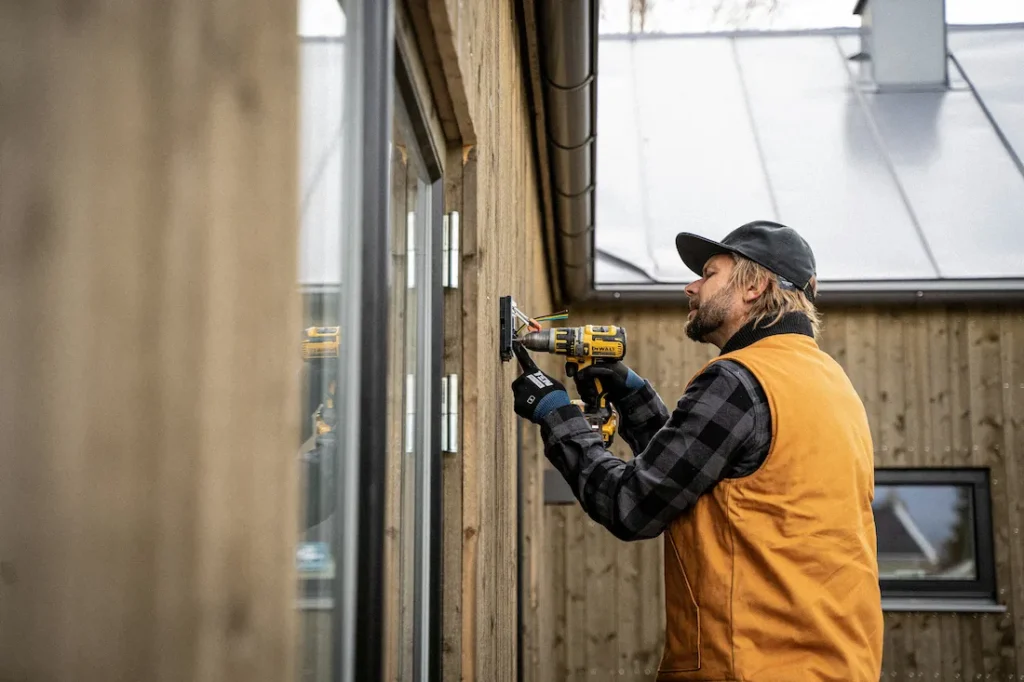
DIY smart home systems are mostly plug-and-play, making them affordable and easy to install for users with basic technical skills. Professional installation is better suited for centralized systems where lighting, security, AV, and climate are controlled from one platform with custom programming.
Your choice depends on your technical expertise, whether you prefer simple DIY flexibility or a fully integrated, centrally managed smart home. DIY, plug-and-play upgrades (like smart locks, thermostats, and lighting) can increase buyer interest and offer a modest value boost of 2–4%, especially in mid-range homes. Professionally installed, centralized systems (like Control4, Crestron, or Savant) typically deliver higher resale premiums of 7–10%, because buyers see them as permanent, high-end infrastructure rather than removable gadgets.
FAQs (Frequently asked questions)
How much value does home automation really add?
Home automation typically adds 3-5% to property value, translating to $15,000-$25,000 on a typical $500,000 home. Comprehensive security systems can command up to 5% premiums alone. The exact increase varies by market sophistication, with tech-forward areas like San Francisco and Austin seeing 7-10% premiums, while traditional markets yield 2-5% increases.
What smart home upgrades provide the highest ROI?
Smart thermostats deliver the highest ROI (typically 4,000%+ including energy savings and property value increase), followed by video doorbells (5,000%+ when including faster sale benefits), smart security systems (1,500-3,000%), and comprehensive smart lighting (875-1,750%). These categories are universally desired and appeal to the widest buyer demographics.
Should I DIY or hire professionals for smart home installation?
DIY makes sense for properties under $500,000, budgets under $5,000, and sellers planning to list within 1-3 years. Professional installation is justified for homes above $500,000, comprehensive whole-home automation, new construction projects, and owners planning to hold properties 5+ years. The hybrid approach—DIY basics with professional installation for complex systems—often provides optimal value.
Are Matter-compatible devices worth the investment?
Yes, Matter certification provides future-proofing through universal compatibility. Matter devices work with Amazon Alexa, Google Home, Apple HomeKit, and Samsung SmartThings simultaneously, eliminating compatibility concerns buyers might have. As the standard expands, Matter devices will integrate seamlessly with future technologies, protecting your investment’s longevity.
Bottom Line
Smart home automation represents one of the most strategic investments you can make in your property when implemented thoughtfully. The key is focusing on universally valued upgrades that deliver genuine lifestyle improvements while building property equity.
Focus first on high-impact essentials like smart thermostats, video doorbells, smart locks, and lighting, as these deliver the strongest buyer appeal and ROI. Even a modest investment of $1,500–$3,000 in these areas can increase property value by $10,000–$20,000. Follow the 2–6% rule of home value when scaling your automation budget to maximize resale returns. Finally, prioritize integrated systems over random gadgets, as buyers value seamless, connected experiences more than scattered tech upgrades.
About the Author
Swapnil More is an IT professional and smart home networking enthusiast based in Canada. He focuses on smart home reliability, device security, and network-optimized automation systems through hands-on testing and real-world deployment.